
Why Your Pet Might Need Dental X-Rays
Why Prioritize Dental Health for Your Pet?
Dental health is a crucial part of your pet's overall well-being. Common dental issues, such as periodontal disease, tooth abscesses, and oral tumors, can lead to severe discomfort and serious health problems.
According to the AAHA Dental Care Guidelines, by the age of three, most dogs and cats show signs of periodontal disease. What makes dental disease particularly challenging is that much of the damage occurs below the gum line—invisible to the naked eye but potentially causing significant pain and systemic health issues.
That's where dental X-rays come in.
What Dental X-Rays Reveal
While a visual examination of your pet's mouth can identify obvious problems like tartar buildup, broken teeth, or red gums, approximately 60% of tooth structure lies beneath the gum line. Dental radiographs (X-rays) allow us to see:
Below the Gum Line
- Tooth roots — Infections, abscesses, and root damage
- Bone loss — From periodontal disease
- Jawbone health — Fractures, tumors, cysts
- Hidden tooth decay — Not visible on surface
- Unerupted teeth — Especially in puppies and kittens
- Retained root fragments — From previously broken teeth
Problems That Look Normal on the Surface
A tooth may appear perfectly healthy during a visual exam while hiding significant disease beneath the gum. Dental X-rays frequently reveal unexpected issues that change treatment plans entirely.
When Are Dental X-Rays Recommended?
At Skyway Animal Hospital, we recommend dental radiographs:
During Professional Dental Cleanings
Full-mouth X-rays give us a complete picture of your pet's oral health. This allows us to:
- Identify hidden problems before they become emergencies
- Make informed decisions about which teeth can be saved
- Document baseline oral health for future comparison
When Specific Problems Are Suspected
- Broken or discolored teeth
- Swelling in the face or jaw
- Reluctance to eat or dropping food
- Bad breath that won't resolve
- Bleeding from the mouth
- Visible masses or growths
- Known history of dental disease
For Certain Breeds
Some breeds are predisposed to dental problems and may benefit from more frequent imaging:
- Small dogs (Yorkies, Chihuahuas, Poodles) — Prone to crowding and retained baby teeth
- Brachycephalic breeds (Bulldogs, Pugs) — Abnormal jaw structure
- Greyhounds — Known for dental disease
- Cats — Prone to painful resorptive lesions
The Dental X-Ray Process
Anesthesia Is Required
Unlike human dentistry, pets don't hold still and say "ahh." To obtain quality dental X-rays and perform a thorough oral examination, your pet needs to be under general anesthesia. This is also necessary for:
- Complete cleaning above and below the gum line
- Probing for periodontal pockets
- Safe examination of all tooth surfaces
- Any necessary extractions or treatments
What Happens During a Dental Procedure
- Pre-anesthetic blood work — Ensures your pet is healthy enough for anesthesia
- Anesthesia induction — Your pet is safely sedated
- Full oral examination — Every tooth is examined and charted
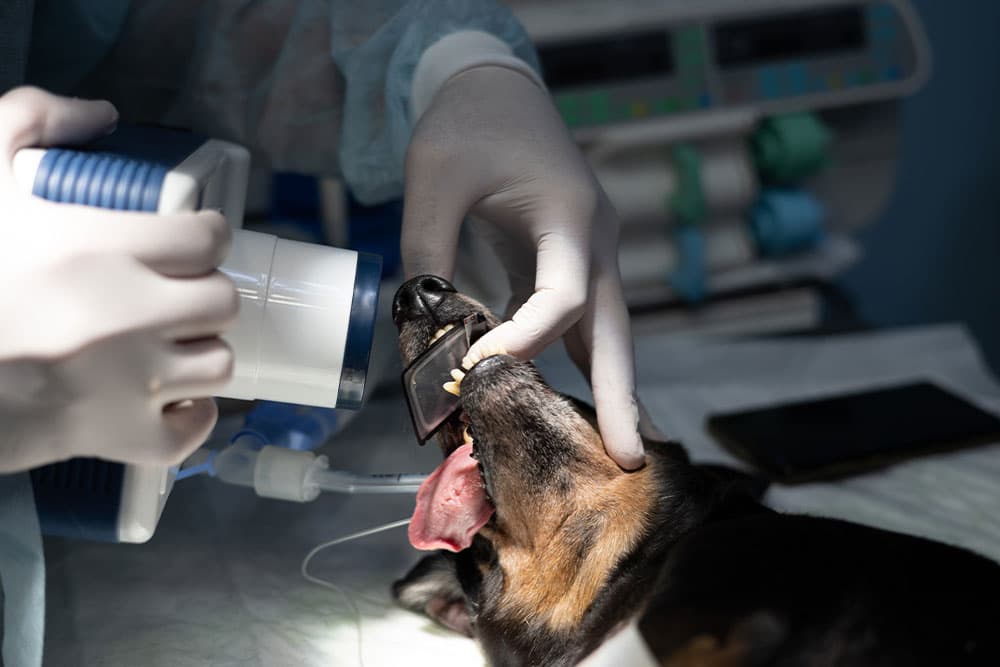
- Dental radiographs — Digital X-rays of all teeth
- Scaling and polishing — Removal of plaque and tartar
- Treatment — Any necessary extractions or procedures
- Recovery — Your pet wakes up in a warm, comfortable area
Digital Dental Radiography
We use digital dental X-ray technology, which offers:
- Immediate images (no waiting for film development)
- High-quality detail
- Lower radiation exposure
- Easy comparison to previous images
- Ability to enlarge and enhance images
What We're Looking For
Signs of Periodontal Disease
- Bone loss around tooth roots
- Widening of the periodontal ligament space
- Root exposure
Tooth Resorption
Common in cats, this painful condition causes teeth to be "eaten away" from the inside. Often invisible without X-rays.
Abscesses and Infections
- Darkened areas at root tips indicate infection
- Abscesses can spread to other areas if untreated
Fractures
- Root fractures invisible on surface
- Jaw fractures
- Previously traumatized teeth
Developmental Abnormalities
- Missing teeth
- Extra teeth
- Abnormal root development
- Unerupted or impacted teeth
After the X-Rays
Based on the radiographic findings, we'll discuss:
- Overall oral health status
- Teeth that need treatment or extraction
- Home care recommendations
- Follow-up schedule
If extractions are needed, we'll explain why and what to expect during recovery.
The Cost of Comprehensive Dental Care
While dental X-rays add to the cost of a dental procedure, they often save money in the long run by:
- Identifying problems early when they're easier (and less expensive) to treat
- Preventing the need for more extensive procedures later
- Avoiding extraction of teeth that may be salvageable
- Ensuring diseased teeth are properly identified and treated
Preventive Care Is Key
The best approach to dental health is prevention:
- Daily tooth brushing with pet-safe toothpaste
- Dental treats and chews (look for VOHC-approved products)
- Regular professional cleanings as recommended
- Annual dental examinations as part of wellness care
Learn more about our comprehensive Dental Care services.
Schedule a Dental Consultation
If your pet has bad breath, difficulty eating, or you've noticed changes in their mouth, don't wait. Dental disease is painful and can affect your pet's overall health.
Contact us to schedule a dental consultation and give your pet the gift of a healthy, pain-free mouth.
Trusted Resources
Skyway Animal Hospital 3258 5th Ave S, St. Petersburg, FL 33712 Phone: 727-327-5141